Fleet Washing in Conway, AR
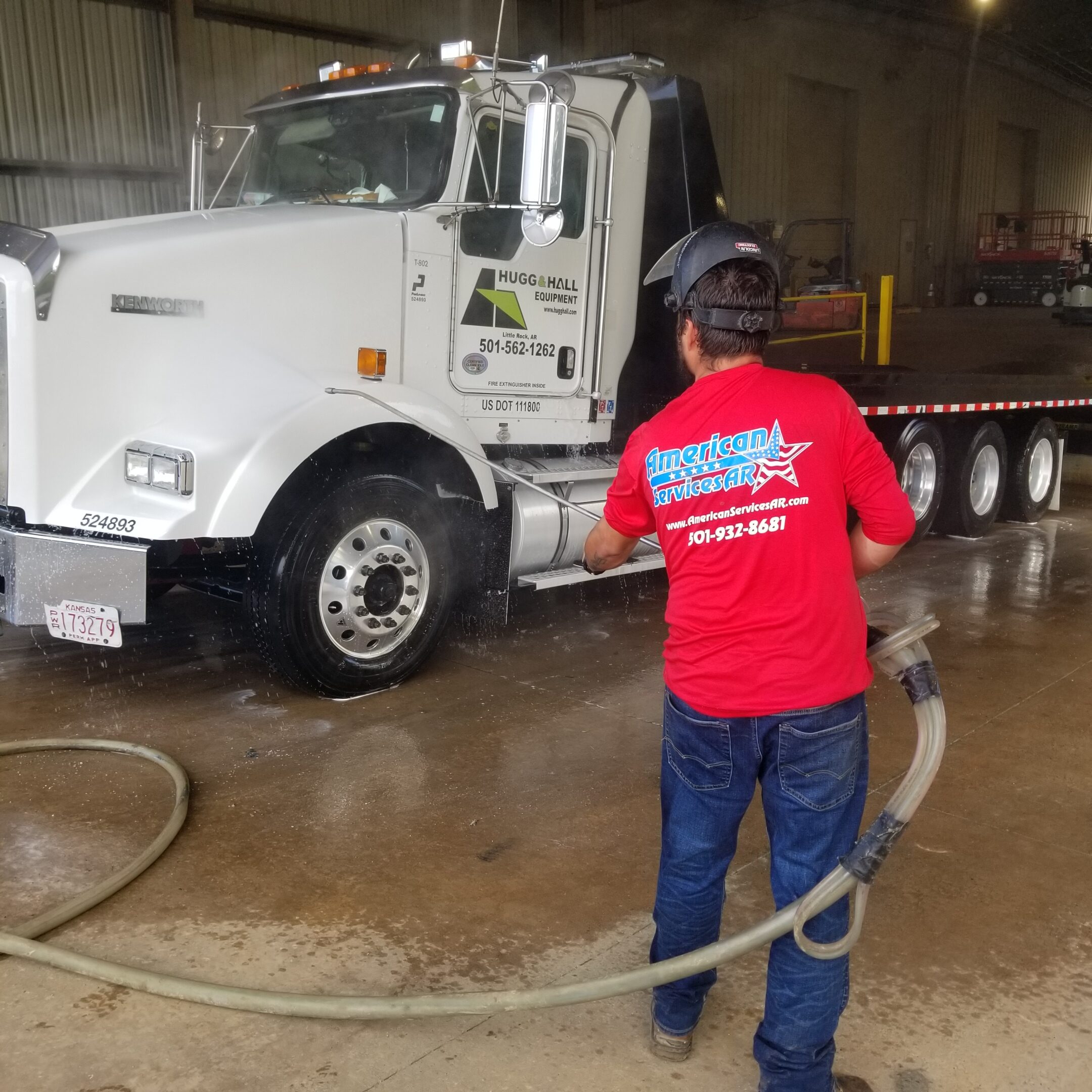
Our yard is on Mill Pond Road, so Conway fleet work is the shortest run we make — and our records show 51 fleet washing jobs here. What that number does not show is the shape of the work. Conway fleets are mostly small: four service vans, a couple of trucks and a trailer; a landscaping outfit with three rigs; a contractor with a handful of pickups and a dump. Very few Conway customers have a yard full of tractor units.
That changes the economics in a way worth being direct about, because it is the reason most small Conway fleets have never had this done properly.
Why a Four-Van Fleet Usually Gets Told No
Mobile washing prices around mobilization. Getting a rig, water, power and a crew to a site costs the same whether there are four vehicles on it or forty, so a contractor traveling an hour has to spread that cost over enough units to make it work — and a four-van fleet does not carry it. That is why small operators end up at the automatic wash on Dave Ward, or washing their own vans on a Saturday, or not washing them at all.
Being based in Conway removes most of that problem. A four-vehicle fleet here is a short run and a couple of hours, and it can slot into a morning around other Conway work rather than needing to justify a day. If you have been quoted a number that made no sense for the size of your fleet, that is usually what you were being charged for.
What Conway Puts on a Work Vehicle
The soil profile here is genuinely different from the industrial side of the river, and it is mostly organic and mostly seasonal:
- Pine sap and resin. Faulkner County is loblolly country and every vehicle that parks under a tree wears it. Sap is not dirt — it bonds to clear coat, and on a hot panel it softens, spreads and then cures harder. Left through a summer it etches a permanent outline into the finish. It needs a solvent approach and patience, not pressure.
- Pine and oak pollen. The spring yellow layer is abrasive. Wiping a pollen-covered van with a dry cloth — which is what most people do — puts fine scratches across every horizontal panel. It wants flooding and lifting, not wiping.
- Red clay. Iron-rich, so it stains rather than simply soiling, and it sets into textured surfaces like bed liners and step plates where it is very hard to get back out.
- Concrete and mortar slurry on contractor trucks. Alkaline, and it cures. This is the one genuinely urgent soil on the list — once it has set on paint or glass it comes off with abrasion or it does not come off.
- Winter de-icer off I-40. Conway sits on a heavily treated corridor, and the brine is on the underside and inside the wheel arches long after the roads look clear.
- Grass, sap and fertilizer residue on landscaping rigs, trailers and mower decks — corrosive to steel trailer frames in a way that surprises people.
Work Vans and Service Bodies — the Slow Parts
A tractor unit is a big, simple shape. A service body is a small, complicated one, and it takes longer per vehicle despite being a third of the size. The time goes into places that a quick wash skips entirely and that then look worse than before, because the clean panels show up the dirty gaps:
- Compartment door shuts, hinges and the lip where water sits and rusts the door bottom.
- Ladder rack uprights, roller ends and the roof surface underneath, which almost never gets touched.
- Step plates and grab handles — the parts every customer physically contacts.
- Bed liners and textured plastic, where clay and grit sit down in the texture.
- Rear door seals and the inside face of the doors, which is what your customer sees when the van is open at their property.
We price service bodies as their own class for this reason rather than charging them as “a van”. It is slower work and pretending otherwise just means it gets skipped.
Hot Water, Cold Water and When Each Earns Its Keep
Hot water is not automatically better and it costs more to produce, so it is worth knowing where it actually changes the outcome. Heat accelerates chemical reaction and softens anything oil-based, so it earns its place on grease, heavy road film, engine bays, diesel staining and — importantly here — on cured pine sap, where the difference is dramatic.
Cold water with correct chemistry and correct dwell handles the large majority of routine Conway fleet work perfectly well: general soil, clay, pollen, dust and light film. Where hot water is actively a bad idea is on and around vinyl wrap seams and older decals, where heat plus pressure lifts an edge that would have survived a cold wash indefinitely.
Water Spotting and the Rinse Nobody Thinks About
The most common complaint about any vehicle wash is not that it was not clean — it is that it dried spotted. Spots are dissolved mineral left behind when a droplet evaporates, so they come from the water, not the wash, and they get dramatically worse on a hot panel in direct sun. On a dark-colored van they are the only thing anyone notices.
Avoiding it is a matter of sequence rather than product: work shaded elevations or early in the day, keep panels wet rather than letting sections flash off between steps, final-rinse with a sheeting flow so the water leaves as a film rather than as beads, and dry the glass and any dark horizontal panels by hand. On fleets where appearance is the whole point, that last step is most of what you are paying for.
Trailers — the Vehicle Nobody Budgets For
Enclosed trailers, equipment trailers and dumps get washed last, least, and often never, which is a shame on two counts. They usually carry the largest single area of your branding, and they are the unit most exposed to corrosion — open steel frame, an unsealed deck, and a salt-and-clay load carried directly on it. On a landscaping or contracting fleet in Conway, the trailer is frequently the worst-looking thing in the convoy and the cheapest to put right. We price them as part of the fleet rather than as an afterthought.
Fleet Washing in Conway, AR — Questions We Get
Is my fleet too small to be worth it?
In Conway, almost certainly not. Most of our fleet customers here run between three and a dozen vehicles. Being based in town is the reason that works — there is no hour of travel to spread across your four vans. If another contractor has priced you as though there were, that is the difference you were seeing.
Can you come to our yard, or our jobsite?
Either. Most Conway work is done at the customer’s yard or premises. We can work at an active site where there is somewhere for water to go and somewhere safe to stand, which for contractors is often the practical option because the vehicles never come home at the same time.
How often do work vans need doing?
Monthly is the sensible default for a liveried service van in Conway, and it is mostly driven by pollen in spring and sap in summer rather than by mileage. Contractor trucks on active sites often want service every two weeks through the build season and much less in winter. We would rather set a frequency that matches the season than sell you twelve identical visits.
Will you get pine sap off?
Usually, and it is one of the more common things we are asked for here. Fresh sap comes off readily with the right solvent and heat. Sap that has been baked on for a season comes off, but it can leave a dulled outline where it has etched the clear coat — that is paint correction rather than washing, and we will tell you which one you are looking at before we start rather than after.
Do you wash the insides?
Cargo areas, bed liners and compartment interiors, yes — that is part of a proper service-body wash. Full cab interior valeting is a different trade and we would rather point you at someone who does it properly than do a mediocre version of it.
What does it cost?
Per vehicle, by class, with frequency and condition factored in — a van, a service body and a trailer are three different prices and we quote them separately rather than averaging. Pricing guidance is above. For a small Conway fleet we can usually give you a firm number after looking at the vehicles once, and being in town means that look does not cost you anything.
★ 4.9 Google Rating | Since 2010 | Fully Insured | Free Estimates
When your property needs professional fleet washing Conway AR service, American Services AR delivers — home to the University of Central Arkansas and one of Arkansas’s fastest-growing cities. We provide expert fleet washing Conway AR homeowners and businesses rely on, with fully insured service and free estimates throughout Faulkner County. Call (501) 289-5623 to schedule your free estimate today.
Fleet Washing Conway AR — Pricing Guide
Pricing for fleet washing Conway AR depends on property size, surfaces, and scope of work:
- Standard commercial vehicle (van or truck): approximately $40 to $80
- Semi truck (cab only): approximately $75 to $125
- Semi truck + trailer: approximately $120 to $200
- Volume fleet pricing: available for 5-plus vehicles per visit
We provide free, on-site estimates for every fleet washing Conway AR job throughout Faulkner County. No surprise charges — we quote the complete job before we begin. Call (501) 289-5623 or request a free estimate online. We respond the same business day.
Areas We Serve
American Services AR is based in Conway and has worked across Arkansas since 2010. These are the main markets our crews cover — each link opens that city’s page.
Central Arkansas
Across Arkansas
Related Services in Conway, AR
- Pressure Washing in Conway, AR
- Parking Lot in Conway
- Concrete Cleaning in Conway
- Gutter Cleaning in Conway, AR
- Snow Removal in Conway
Where can I find fleet washing near me in Conway, AR?
American Services AR provides professional fleet washing near you throughout Conway, AR and Faulkner, Pulaski, Saline, and surrounding counties. We’re locally based in Conway — same-day and next-day appointments available. Call (501) 289-5623 or book online to schedule fleet washing near you today. There are roughly 28,605 housing units in Conway, and we route the whole city rather than one subdivision.