
Deck and Fence Cleaning in Conway, AR
Wood is the least forgiving surface on a property and the one most often ruined by cleaning. A deck cleaned with too much pressure looks acceptable while it is wet and then dries furred, fuzzy and visibly striped — and once the grain has been raised it stays raised. It holds more dirt afterwards, it takes stain unevenly, and the only remedy is sanding.
So the useful thing to know before you hire anyone is that cleaning wood is a chemistry job with a low-pressure rinse, not a pressure job.
Gray Is Not Dirt
People book a deck clean because it has gone gray and assume it is filthy. It is not. Ultraviolet light breaks down lignin, the compound binding wood fibers together, and the degraded surface layer turns silver-gray. Washing it does not remove gray because gray is not a deposit — it is damaged wood.
What actually restores color is a wood brightener, usually oxalic-based, applied after cleaning. It reacts with the degraded surface and returns the wood toward its natural tone. That is a separate step from cleaning and it is the one that produces the result people actually wanted. Anyone quoting a deck clean without mentioning brightening is quoting half the job.
What Is Actually On a Conway Deck
- Mildew and algae. Black and green, worst on shaded boards and the north side. Living, so it needs solution and dwell time rather than force.
- Tannin bleed. Brown or reddish blotching, natural to cedar and redwood and common where oak leaves or sweetgum sat through a wet fall.
- Iron stains. Dark blue-black marks around nails, screws and fixings, where metal has reacted with tannin in the wood. These need oxalic treatment; cleaning alone leaves them.
- Pine sap and resin. The Faulkner County speciality on anything under loblolly. Bonded rather than deposited — it needs a solvent and patience, and scrubbing spreads it.
- Old failed sealer. Patchy, flaking, or glossy in the sheltered areas and gone where the sun hits. This has to come off before anything new goes on, and it is a stripping job rather than a cleaning one.
The Material Decides Everything
Pressure-treated pine
The default on Conway decks, and softer than people expect. It furs readily. Low pressure and chemistry only. New PT pine is also usually too wet to seal for several months after installation — sealing a deck that has not dried out traps moisture in the boards.
Cedar and redwood
Beautiful and softer still. Very easy to damage, prone to tannin bleed, and needs the gentlest approach of any decking. Brightening matters more on these because the color is the point.
Composite and PVC
Different rules entirely. Composite does not need brightening and must never be treated as wood. The problem on composite is surface mold growing in the embossed grain, and most manufacturers specify what may and may not be used — some cleaners void warranties. If you know the brand, tell us. Pressure on composite can permanently mar the surface texture.
Fences
Usually PT pine or cedar pickets, and the practical issues are different from a deck: both sides need doing to look right, the bottom rail sits in wet ground and rots first, and a shared fence means a conversation with a neighbor before we start spraying anything near their planting.
Cleaning, Then Sealing — and the Gap Between
Sealing is where most of the value is and most of the mistakes are made, and the mistake is almost always moisture.
Wood has to be genuinely dry before a sealer or stain goes on. Sealing damp wood traps moisture inside the board, which is how you get peeling, blotching and premature failure within a season. In Conway’s humidity that means a realistic gap of two to three dry days between cleaning and sealing, sometimes more after heavy rain. Anybody offering to clean and seal on the same afternoon is sealing water into your deck.
Timing-wise, spring and fall suit best. Mid-summer is worse than people think — a hot board flashes the sealer off before it can penetrate.
What We Look At While We Are Down There
A deck clean is the best opportunity anyone gets to look at the structure, and we report what we see rather than only what we washed:
- The ledger connection where the deck attaches to the house. This is the single most common serious deck failure and it is worth eyes on.
- Post bases at ground level, where rot starts.
- Soft or spongy boards, particularly at board ends and around fixings.
- Loose or rusted fasteners, wobbling rails and loose balusters.
We are a cleaning contractor rather than a structural inspector, and we are careful about that line — but we will photograph anything that looks wrong and tell you plainly that it wants a carpenter’s eye.
Deck and Fence Cleaning in Conway, AR — Questions We Get
Why is my deck still gray after cleaning?
Because gray is UV-degraded wood rather than dirt, so washing cannot remove it. What restores color is a wood brightener applied after cleaning, which reacts with the degraded surface and returns the wood toward its natural tone. It is a separate step, and a quote that does not mention it is a quote for half the job.
Can you clean and seal on the same day?
No, and we would be suspicious of anyone who offers to. Wood has to be genuinely dry or the sealer traps moisture in the board and peels within a season. In Conway humidity that is realistically two to three dry days between the two visits, and more after heavy rain.
Our deck got fuzzy last time it was cleaned.
That is furring — the grain raised by too much pressure, and it is permanent without sanding. It is why we clean wood with chemistry and a low-pressure rinse rather than with force. A furred deck holds more dirt and takes stain unevenly, so it is worth sanding before sealing if you are going that route.
What are the black marks around the screws?
Iron staining — the metal fixing reacting with tannin in the wood. Cleaning alone leaves them and they are often the last thing spoiling an otherwise good result. They need an oxalic treatment, which is the same chemistry as brightening, so it usually happens in the same step.
We have a composite deck.
Different rules and it is worth telling us the brand. Composite is never brightened and must not be treated as wood; the problem is usually mold in the embossed grain rather than surface soiling. Most manufacturers specify what may be used and some cleaners void the warranty, and pressure can permanently mar the texture.
Do you do both sides of the fence?
If we can get to it, and it is worth doing because a fence cleaned on one side looks half-done from the other. On a shared boundary we would rather you had a word with the neighbor first — we will be working next to their planting and it is better arranged than apologized for.
★ 4.9 Google Rating | Since 2010 | Fully Insured | Free Estimates
When your property needs professional deck and fence cleaning Conway AR service, American Services AR delivers — home to the University of Central Arkansas and one of Arkansas’s fastest-growing cities. We provide expert deck and fence cleaning Conway AR homeowners and businesses rely on, with fully insured service and free estimates throughout Faulkner County. Call (501) 289-5623 to schedule your free estimate today.
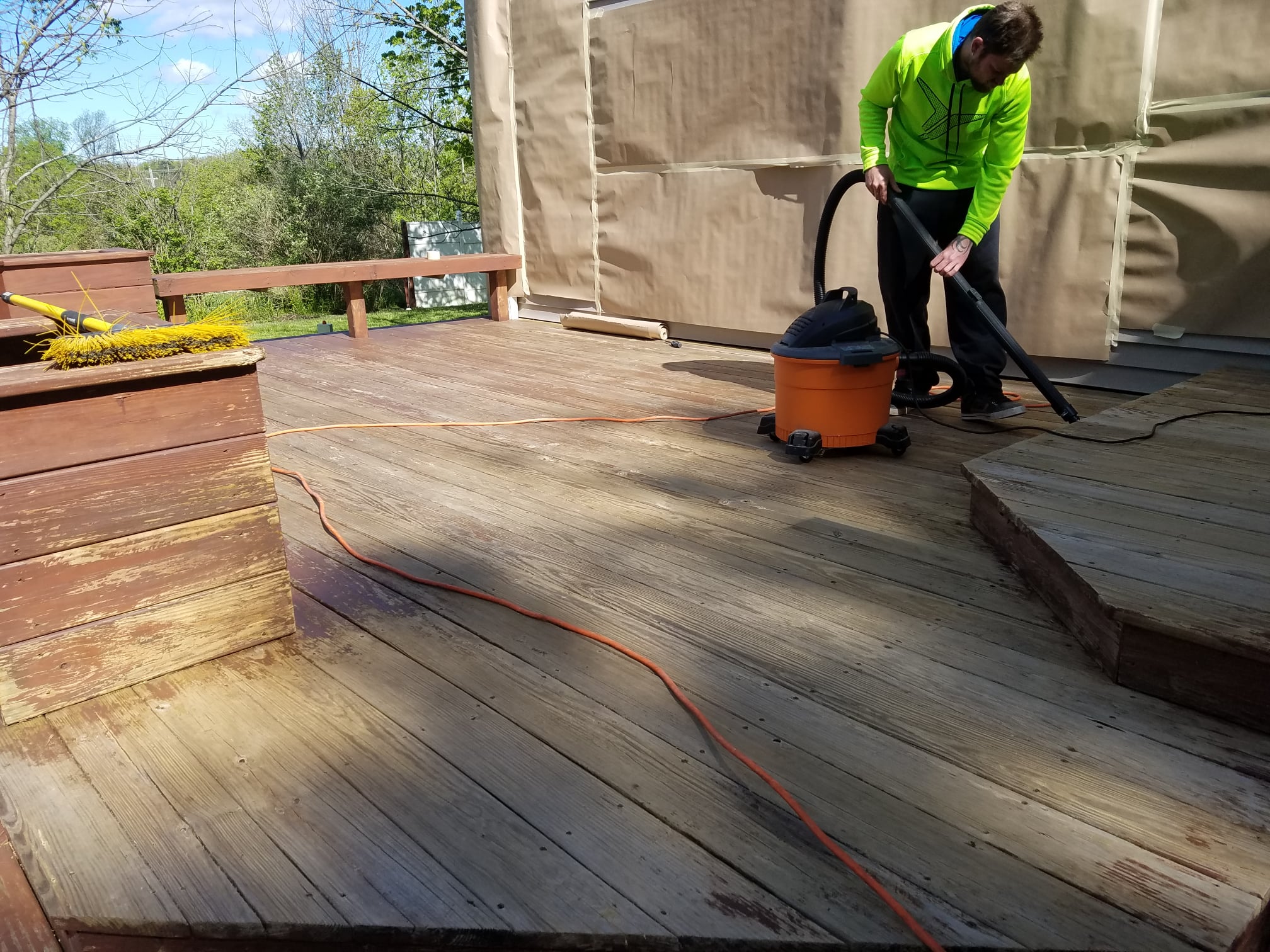
Deck And Fence Cleaning Conway AR — Pricing Guide
Pricing for deck and fence cleaning Conway AR depends on property size, surfaces, and scope of work:
- Deck cleaning (standard): approximately $150 to $300
- Fence cleaning (per linear foot): approximately $1 to $3
- Deck + fence package: combination pricing available
- Large or multi-level decks: priced on-site with free estimate
We provide free, on-site estimates for every deck and fence cleaning Conway AR job throughout Faulkner County. No surprise charges — we quote the complete job before we begin. Call (501) 289-5623 or request a free estimate online. We respond the same business day.
Areas We Serve
American Services AR is based in Conway and has worked across Arkansas since 2010. These are the main markets our crews cover — each link opens that city’s page.